Flare Leggings and Wet Sidewalks: How to Keep the Hem Off the Ground
Quick Answer: Flare hems drag because the flattering length — just off the floor with heels on — becomes floor-contact length the moment you wear flats. The fixes that keep the silhouette intact: add height instead of removing length with a platform sneaker or a low block heel, own two pairs hemmed differently if flares are a daily piece, use a temporary hem tape for one-off wet days, and check for a weighted or bound hem finish, which resists wicking far better than a raw stretch edge.
You get home and the back of both legs is wet to the calf.
Why does the hem soak upward instead of just getting wet?
Capillary action. Knit fabric is full of tiny channels between yarns, and water climbs those channels against gravity. A hem that touches a wet sidewalk for a second does not stay wet at the hem — the moisture travels several inches upward over the following minutes.
Synthetic fibers wick more aggressively than natural ones, which is normally the feature you want. The same property that pulls sweat away from your skin pulls puddle water up your leg.
Thicker hems wick more, because there is more material. A doubled-over hem band holds several times the water of a single-layer raw edge, which is why the wet patch on a well-finished pair often looks worse than on a cheap one.
The back of the leg gets worse than the front for a simple mechanical reason: as you walk, your heel lifts and the back hem swings down and forward into the ground behind you. The front hem lifts away. That is why the damage is always asymmetric.
And once the fabric is wet it gets heavier, hangs lower, and contacts the ground more. The problem compounds through the walk.
Should you shorten the pair or change the shoe?
Change the shoe, in almost every case. The flare exists to travel over something and finish the leg line. Cut the hem short enough to clear the floor in flats and the flare flips outward, sits at an odd height, and reads as a cropped style rather than the silhouette you bought.
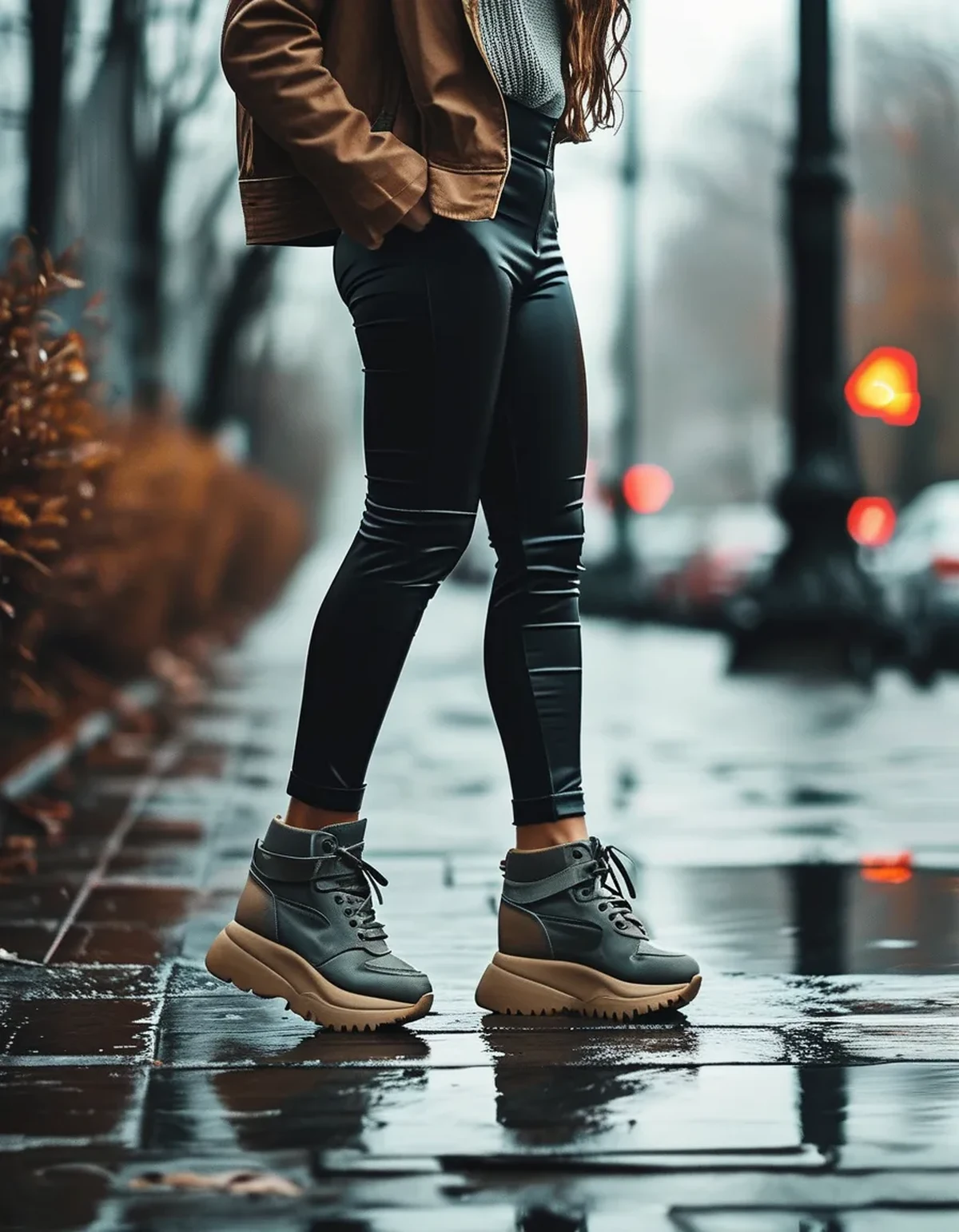
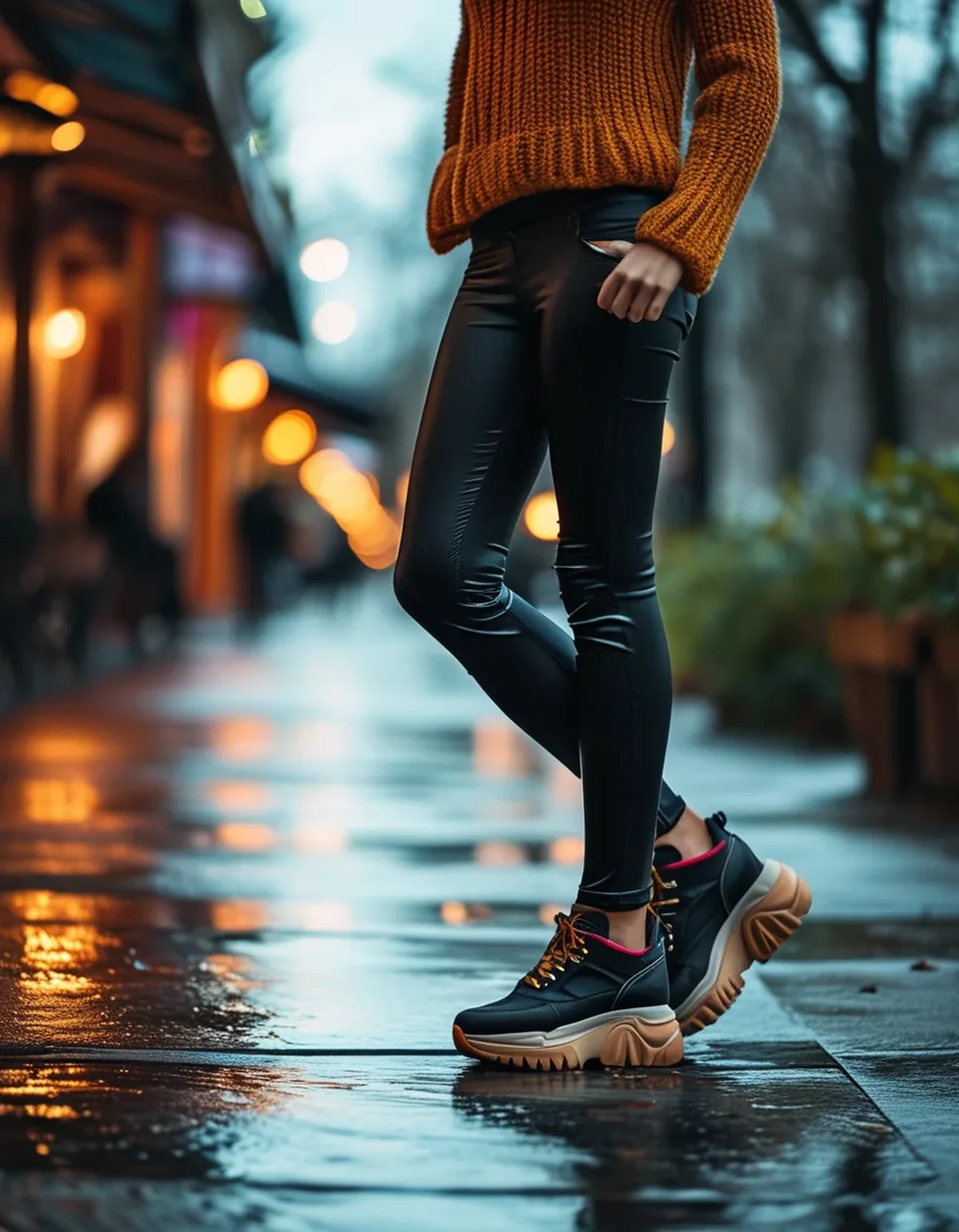
The simplest fix is height at the bottom: a platform sneaker, a 1.5 to 2.5 inch block heel, or a lug-sole boot. Any of these lifts the hem an inch or more without changing the garment, and all three suit the flare’s proportions.
Platform sneakers are the underrated answer for rainy days specifically, because they add height, have a water-resistant sole, and read casual enough for the weather.
If you genuinely wear flats every day, then yes — hem the pair, and hem it to the flat. Just do it deliberately, with a coverstitch, rather than gradually through fraying.
A middle option: own two pairs at two lengths. They look different enough that nobody registers them as the same style, and each one is correct for its shoe. That is what most people who wear flares regularly end up doing.
What construction resists dragging and wicking?
A bound or taped hem. A hem finished with a bound edge has a denser, more closed structure that wicks slower than an open raw edge. It also holds its shape better as it wears.
A weighted hem. Some flares include a small amount of extra material or a light chain-weight equivalent at the hem to make it hang straight rather than swing. Straight-hanging hems make ground contact less often.
Higher-density fabric. A dense ponte or scuba-knit flare picks up less water and dries faster than a thin, open jersey.
DWR finish. Uncommon in flares but excellent when present — a durable water-repellent treatment makes water bead rather than wick. It wears off over roughly 20 to 30 washes and can be reapplied with a spray-on product.
Darker colors at the hem. Not a construction feature so much as a practical one: water marks are dramatically more visible on light and mid-tone fabrics. If you wear flares in wet weather, dark hems save you from looking soaked for the rest of the day.
What to avoid: a raw-cut stretch edge on a lightweight fabric. It wicks fastest, frays quickest, and stretches wider as it wears, which brings it closer to the ground.
What Nobody Tells You About Flare Hems
Flares grow. Stretch fabric under its own weight elongates slightly over a wear, so a pair that cleared the floor at 8 a.m. can be touching it by evening. Higher-recovery fabric grows less.
Washing shrinks and then re-grows. Many flares come out of the wash noticeably shorter and stretch back over the first hour of wear. Do not hem a pair straight out of the dryer — you will cut it too short.
The widest part of the flare is not the hem. On most cuts the widest point is an inch or two above the hem, which means the fabric that hits the ground is the narrower edge. That is why a slight shortening changes the look less than people fear.
Hem tape is a legitimate one-day fix. Fusible tape on stretch fabric does not hold permanently, but for a single rainy commute it is fine and removes cleanly.
Wet flare fabric stretches out of shape if you sit in it while soaked. Change out of a wet pair rather than letting it dry on you, or the hem sets wider than it started.
Fraying is a one-way door. Once threads pull, the edge unravels progressively. Trim and re-finish early rather than watching it spread.
FAQ: Flare Legging Questions, Answered
What is the correct flare hem length?
With the shoes you will actually wear: front of the hem touching the top of the foot, back sitting about half an inch off the ground. Same standard as trousers.
Can I wear flares with sneakers at all?
Yes, with a chunky or platform sole. A low-profile flat sneaker leaves the hem too long and buries the shoe entirely, which shortens the leg.
How do I dry a soaked hem without ruining the fabric?
Lay the pair flat, blot the hem with a towel, and let it air dry. Do not hang it wet by the waistband — the weight of the water stretches the length permanently.
Does a wider flare drag more?
Slightly, since there is more fabric to swing. But length is the dominant variable by a large margin. A narrow flare cut too long drags more than a wide flare cut correctly.
TL;DR:
- Wet hems wick upward through the fabric — the back of the leg suffers most because of how you walk.
- Fix it by adding height (platform sneaker, block heel, lug boot), not by cutting the pair short.
- Look for bound hems, denser fabric, and dark hem colors; avoid raw-cut edges on lightweight knits.
- Never hem a pair fresh from the dryer — the fabric grows back over the first hour of wear.
- Two pairs at two lengths is the honest solution if flares are a daily piece.
The flare works because it finishes the leg line at the floor. Keep it just off the ground and it does exactly that, rain or not.
See It in Motion
Seen here: Bootcut Capri Yoga Pants with Pockets — shop similar styles on bubblelime.com
Keep Reading
This article is for general informational and styling purposes only. Fit, sizing, and product availability may vary.