Flare Leggings on a Commute: What Holds Up and What Does Not
Quick Answer: A commute exposes three things a weekend does not: hem contact with wet ground, static from mixed indoor and outdoor environments, and repeated sitting on public transport. The pairs that survive are mid-weight with a slightly shorter hem, in a fabric that resists water marking, in a colour that does not show a wet hem. A 1cm shorter hem than you would choose for leisure is the single most useful adjustment.
The failure that ends most commuting flares is not wear. It is a permanently marked hem after three rainy days.

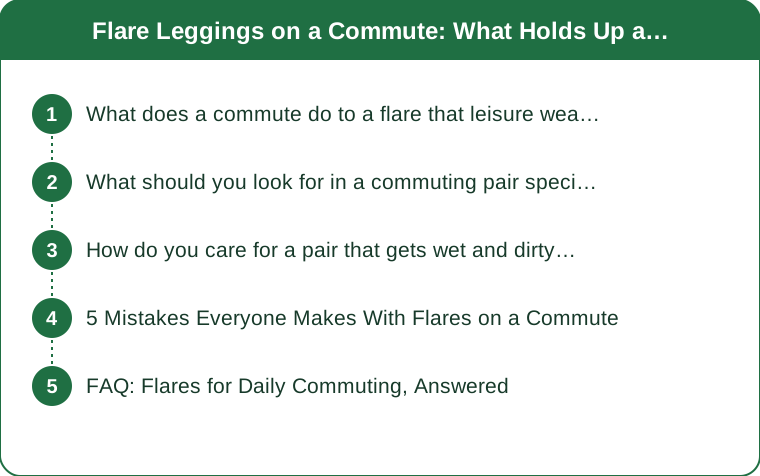
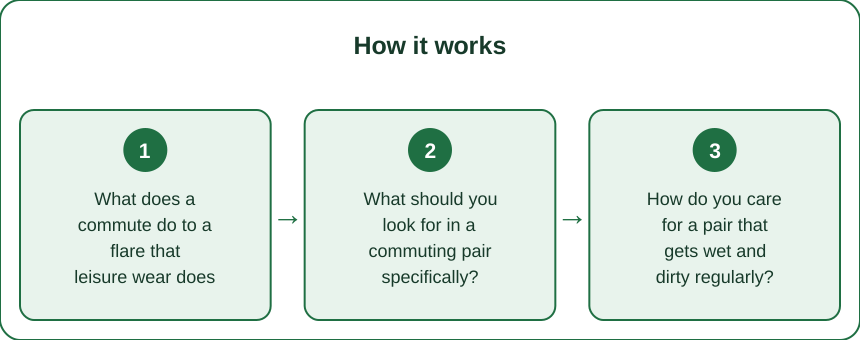
What does a commute do to a flare that leisure wear does not?
Four things, and the hem takes three of them.
Ground contact, repeatedly. A flare hem sits close to the floor by design. On a commute you walk on wet pavement, through puddles, over grit, and across station floors - and a hem with 1cm of clearance touches all of it when you stride rather than stroll.
Why walking speed matters. At a fast pace, the hem swings forward further than it does at a stroll, and the clearance you measured standing still is not the clearance you get moving. This is why the same pair is fine at the weekend and marked by Wednesday.
Wet hem behaviour, which is the real problem. Once a hem is wet:
- It becomes heavier and hangs lower, increasing contact
- It picks up dirt from every surface it touches
- It stays visibly wet for a long time, because the wide hem holds water in the fold
- On light colours the mark is obvious and sometimes permanent, particularly with road grit
Sitting on transport. Repeated sitting on textured seat fabric abrades the seat area and accelerates pilling. A commute involves far more sitting on rough surfaces than most people account for.
Static, which becomes an issue as humidity drops. Moving between dry heated indoor spaces and cool outdoor air builds static in synthetic fabrics, and a wide flare hem clinging to a leg is both uncomfortable and visually the opposite of the intended silhouette.
Escalators and doors. A wide hem near an escalator plate or a closing train door is a genuine, if occasional, hazard rather than a theoretical one.
What should you look for in a commuting pair specifically?
Five things, and they differ meaningfully from what you would choose for leisure.
1. A slightly shorter hem.
- 2 to 3cm clearance rather than 1 to 2cm, measured standing in your commuting shoes
- This is the single highest-value change and it costs almost nothing visually
- Check it walking at speed rather than standing
2. Mid-weight fabric with a tight knit.
- Tighter knits resist water penetration and mark less
- Mid-weight fabric holds the flare shape when wet, whereas light fabric collapses and clings
- Heavier fabric also resists static better than very fine synthetics
3. Colour chosen for wet-hem behaviour.
- Black and deep tones hide a wet hem almost completely
- Mid greys and light neutrals show it most, and are also where grit marking is permanent
- This is the difference between a pair that lasts a season and one that looks tired in a month
4. A finished, durable hem.
- A folded and stitched hem outlasts a raw or bonded edge under repeated ground contact
- Check the hem for existing wear before buying secondhand or on sale - it is the first place to fail
5. Pockets, which matter more on a commute.
- A secure phone pocket changes how you move through a crowded station
- Zip pockets for anything you cannot afford to lose in a seat
What to avoid for daily wear:
- Very light or white fabrics, which mark permanently
- Very long hems, which look best and survive worst
- Fine ribbed or delicate knits, which pill on transport seating within weeks
- Anything requiring careful washing, since a commuting pair will need washing frequently

How do you care for a pair that gets wet and dirty regularly?
Treat the hem separately from the garment, and address marks the same day.
Same-day treatment, which is what determines whether marks become permanent:
- Let mud dry completely, then brush it off. Wet mud rubbed into a knit sets into the fibres. This is counterintuitive and it is the single most useful care instruction here
- Rinse road grit under cold water rather than brushing, since grit is abrasive and brushing grinds it in
- Treat any oily marks with a small amount of detergent worked in gently before washing
Washing:
- Cold, inside out, gentle cycle, which protects both the fabric and the hem
- A mesh bag prevents the wide hem catching on other items
- Never with towels or anything with hooks or zips
- No fabric softener, which coats fibres and worsens both static and moisture handling
Drying, which is where flares are specifically vulnerable:
- Hang by the waistband, not over a rail at the middle. A wet flare hung over a rail stretches at the fold and develops a permanent line
- Never tumble dry. Heat degrades elastane and can shrink the hem unevenly, which on a flare is very visible
- Reshape the hem while damp so it dries flat
On static, which becomes a daily issue from now:
- A quick pass with a damp hand over the fabric discharges it temporarily
- Moisturised legs hold less static than dry ones, which is a real and simple fix
- Avoid fabric softener sheets despite the marketing - the residue affects moisture handling for the life of the garment
- A metal safety pin in an inside seam works for some people and costs nothing to try
Rotation. Two commuting pairs alternated last considerably more than twice as long as one worn daily, because elastane recovers over 24 hours and because each pair dries fully between wears.
5 Mistakes Everyone Makes With Flares on a Commute
1. Using the leisure hem length. Standing still in a shop, 1cm of clearance looks perfect. At commuting pace the hem swings forward and touches the ground, and three wet mornings later it is permanently marked.
2. Wearing light colours daily. A wet hem on black is invisible; on a light grey it is the first thing anyone sees, and road grit on light fabric frequently does not come out.
3. Brushing wet mud off. Rubbing wet mud into a knit sets it into the fibre. Let it dry completely and it brushes off cleanly - this single habit is the difference between a mark and no mark.
4. Hanging them over a rail to dry. A wet flare draped at the middle develops a permanent horizontal line at the fold, which is highly visible on this silhouette. Hang by the waistband.
5. Owning one pair and wearing it daily. Elastane needs about 24 hours to recover, and a commuting pair also needs to dry fully. Two pairs alternated last far more than twice as long as one.
All five come from applying leisure-wear habits to a garment doing a considerably harder job.
FAQ: Flares for Daily Commuting, Answered
How much shorter should a commuting flare be?
Aim for 2 to 3cm of floor clearance rather than the 1 to 2cm you would choose for leisure, and check it while walking at speed rather than standing still.
What colour is most practical?
Black or a deep tone. A wet hem is essentially invisible, and road grit marking on light fabrics is frequently permanent.
How do I get mud out of the hem?
Let it dry completely, then brush it off. Rubbing wet mud into the knit sets it into the fibres, which is what turns a splash into a stain.
How should I dry them?
Hang by the waistband and reshape the hem while damp. Draping a wet flare over a rail creates a permanent horizontal line at the fold.
Why do they cling to my legs now?
Static, which builds as humidity drops and you move between heated indoor air and cool outdoor air. Moisturised skin helps, and fabric softener makes it worse over time despite the claims.
How long should a commuting pair last?
Much longer if you own two and alternate them. Elastane recovers over about 24 hours, and each pair dries fully between wears - the difference is more than double.
TL;DR:
- Cut 1cm off your usual clearance - at commuting pace the hem swings further than it does standing still
- Deep colours hide a wet hem; light ones show it and often mark permanently from road grit
- Let mud dry fully before brushing it off - rubbing wet mud in is what makes it a stain
- Hang by the waistband, never over a rail, or the fold becomes a permanent line
- Two pairs alternated last far more than twice as long as one worn daily
A flare is a weekend silhouette doing a weekday job. Two centimetres and a darker colour is most of what it needs.
See It in Motion
Seen here: Super High Waist Embossed Yoga Leggings with Inner Pocket — shop it on bubblelime.com
Keep Reading
This article is for general informational and styling purposes only. Fit, sizing, and product availability may vary.