Flare Leggings in the Driver's Seat: What Actually Happens to the Hem
Quick Answer: The driver’s footwell is the harshest environment a flare hem regularly encounters. The hem gets caught under the heel against the floor mat, dragged across the door sill on every entry and exit, and pressed against the pedal assembly. The result is asymmetric wear - the right leg wears faster than the left in a left-hand-drive car - plus a hem that stretches out of shape on one side within a few months.
Three habits prevent almost all of it, and none of them require changing what you wear.

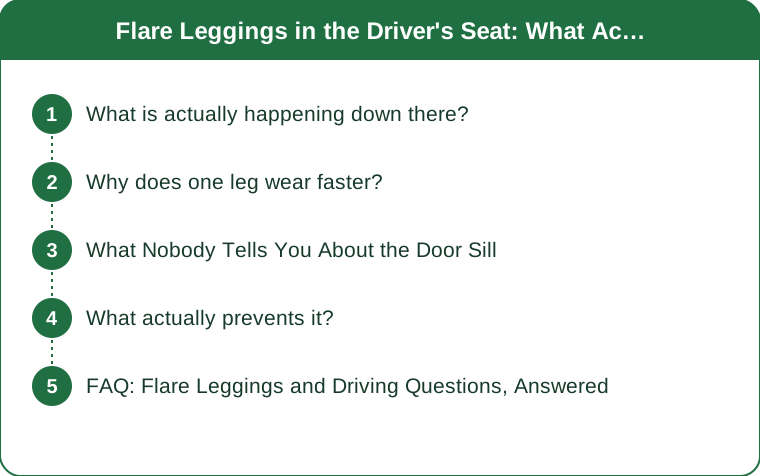
What is actually happening down there?
Four distinct mechanical events, repeated every single trip.
The heel pin. When you sit and put your foot on a pedal, your heel rests on the floor mat. A wide hem falls around and often under that heel. Now the fabric is pinned under your body weight while your foot pivots on the pedal, which grinds the hem against a rubber or carpet mat for the whole journey.
Floor mats are abrasive by design - they need texture to trap dirt. Rubber all-weather mats are the worst offenders, and the wear pattern they produce is a scuffed, slightly fuzzed hem edge on one leg only.
The sill drag. Getting in and out, the hem sweeps across the door sill. That sill collects road grit, water, and salt, and it is at exactly hem height. This is where the grey marks on the back of a hem come from.
The pedal catch. A wide hem can catch on the edge of a pedal, particularly when moving the right foot between accelerator and brake. Beyond the wear, this is a genuine safety consideration - a hem hooked on a pedal in an emergency stop is a real, if rare, problem.
The seat crease. Sitting for a long drive presses a fold into the fabric at the knee and thigh, and on a flare the widening section holds a crease more visibly than a straight leg does.
None of these individually is dramatic. Repeated twice a day for six months, they explain why one leg of a favourite pair looks noticeably older than the other.
Why does one leg wear faster?
Because the two feet do completely different jobs, and this is the clearest diagnostic once you look for it.
In a left-hand-drive car, the right foot operates both pedals and pivots constantly between them. The right heel stays planted and rotates on the mat. That pivoting motion, with a hem trapped underneath, is essentially a slow sanding operation.
The left foot in an automatic mostly rests, either flat or on a footrest. Much less motion, much less wear.
So the standard pattern is a right hem that is scuffed, slightly stretched, and marked, while the left hem looks close to new. On a black legging this shows as a greyish, fuzzed edge; on a lighter colour it shows as visible dirt that does not fully wash out.
The stretching is the more permanent damage. Fabric pinned under a heel and dragged repeatedly gets pulled beyond its recovery point, and the hem circumference on that side gradually increases. Once the two legs differ, the outfit reads as slightly off in a way that is hard to identify - which is often when people conclude a pair has just gone old.
A quick check on any pair you have been driving in: lay them flat, line up the waistbands, and compare the two hem widths. A visible difference means you have found the mechanism.
Manual drivers get a slightly different pattern - more wear on the left from clutch use, and generally more overall because both feet are working.

What Nobody Tells You About the Door Sill
It is the dirtiest horizontal surface you touch regularly, and it is at hem height by design.
The door sill sits below the seal, outside the cabin’s protection. It collects everything the road throws up - grit, brake dust, oil, salt in winter, and standing water when it rains. It does not get cleaned in a normal car wash and it rarely gets wiped.
Every entry and exit sweeps a wide hem across it. Twice per trip, several trips a day.
What that deposits is not ordinary dirt. Brake dust contains fine metal particles, and road grime carries oils that bond to synthetic fibers. Both are harder to remove than the mud people expect, and both are abrasive - so the sill is simultaneously staining and sanding the hem.
This is the specific reason light-coloured flares develop a grey cast at the back of the hem that survives washing.
Three things that help:
- Wipe the sill occasionally. A damp cloth, thirty seconds, once a month. It makes a genuinely visible difference and almost nobody does it.
- Swing your legs out before standing, rather than stepping out one leg at a time. Rotating on the seat and placing both feet outside dramatically reduces sill contact - and it is also easier on the knees.
- Treat hem marks quickly. Oil-based road grime sets. A pre-treatment on the hem before washing removes far more than the wash alone.
The last one matters because most people wash and then decide the mark is permanent, when it was only permanent after the first hot wash set it.
What actually prevents it?
Three habits, none of which require changing what you wear.
1. Hook the hem before you settle. Once seated, before you start driving, reach down and pull the right hem clear of your heel so it falls outside or in front of the foot rather than under it. This takes two seconds and eliminates the heel-pin mechanism, which is the largest single source of wear.
For a long drive it is worth doing deliberately. For a five-minute trip it matters less, though the sill contact still happens.
2. Swing both legs out together. As above - rotate on the seat, place both feet on the ground outside the car, then stand. This is a meaningful reduction in sill contact and it becomes automatic within a week.
3. Keep a designated driving pair, or accept the wear. If you drive a great deal, the honest answer is that flares are not the ideal driving garment and a straight leg is easier. Many people keep flares for days that are not mostly driving. That is a reasonable adaptation rather than a defeat.
Two more that help at the margin:
- A carpet mat over a rubber one on the driver’s side is less abrasive, though worse at handling water.
- Check the hem length against your driving shoes specifically. A hem sized for boots is longer than one sized for flats, and a longer hem in a footwell reaches further under the heel.
And one repair worth knowing: a stretched hem on one side can often be improved by a cool wash and a low-heat, brief tumble - synthetic fibers have some heat-set recovery. It will not fully restore the original, but it frequently brings the two legs close enough that the asymmetry disappears.

FAQ: Flare Leggings and Driving Questions, Answered
Is a hem catching on a pedal genuinely dangerous?
Rarely, but it is a real category of incident and worth taking seriously if you wear a very wide hem. The scenario is a hem hooking on the accelerator edge during a fast foot transfer. Hooking the hem clear before driving removes the risk entirely, which is a low-cost precaution for a low-probability problem.
Will hemming them shorter solve it?
Partly. A shorter hem sits further from the mat and the sill. But a flare hemmed too short loses the line that made it worth wearing, and the correct length is determined by your shoes rather than by your car. Better to change the habits than the garment.
Why does the mark not come out in the wash?
Because road grime is oil-bound rather than water-bound, and normal detergent at cool temperatures struggles with it. A pre-treatment - a small amount of detergent worked directly into the hem, left for fifteen minutes - handles most of it. Never wash it hot first, since heat sets oil-based staining permanently.
Do the same problems apply to wide-leg trousers?
Yes, and generally more so, because a woven wide-leg has more fabric and less recovery than a knit flare. The habits are identical. Woven fabrics also crease more visibly from the seat, which is why linen wide-legs and long drives are a poor combination.
TL;DR:
- Four things damage a flare hem in a car: the heel pinning it to an abrasive mat, sill drag, pedal catching, and seat creasing.
- Wear is asymmetric - the pedal foot’s hem scuffs and stretches while the other stays close to new. Compare hem widths to check.
- The door sill carries brake dust and road oils at exactly hem height, which is why light hems go grey in a way washing does not fix.
- Hook the hem clear of your heel before driving and swing both legs out together when exiting.
- Pre-treat hem marks before washing and never wash them hot first, since heat sets oil-based staining.
Two seconds reaching down before you drive prevents most of it.
See It in Motion
Seen here: Super High Waist Embossed Yoga Leggings with Inner Pocket — shop it on bubblelime.com
Keep Reading
This article is for general informational and styling purposes only. Fit, sizing, and product availability may vary.