Flare Leggings in the Rain - What Actually Happens to the Hem
Quick Answer: A wide hem has more surface area near the ground and more fabric weight, so it wicks water upward faster and holds more of it than a straight leg does. Wet fabric also stretches, which lengthens the hem and puts it closer to the ground, creating a feedback loop. The practical fixes are a slightly shorter hem for wet-weather pairs, denser fabrics over soft brushed ones, and boots rather than low shoes.
It rained for twenty minutes on the way in. Everything above the knee is completely dry. Everything in the bottom six inches is soaked, three shades darker, and now hanging noticeably lower than it was this morning. This is not bad luck, it is a specific and predictable set of physics, and knowing it changes which pair you reach for.

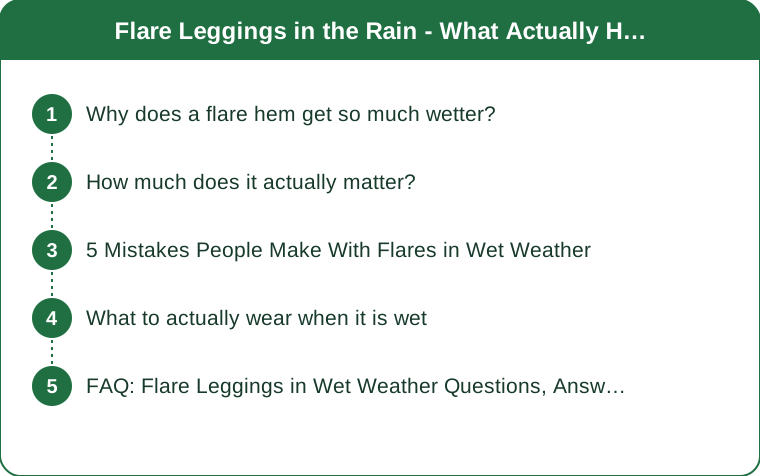
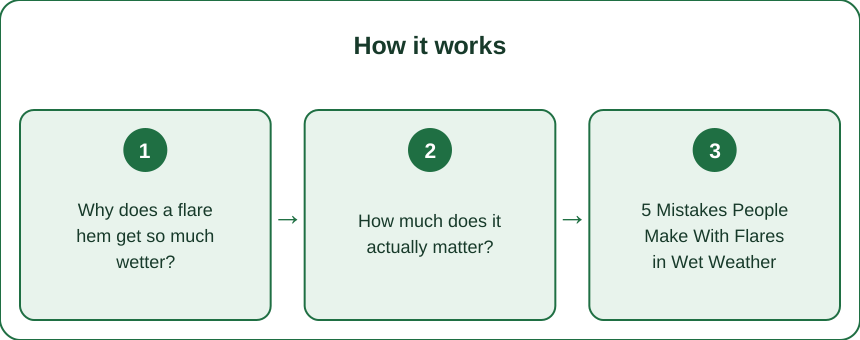
Why does a flare hem get so much wetter?
Four reasons, and they compound each other rather than just adding up.
More surface area near the ground. A flare hem might be 40 to 50 per cent wider in circumference than a straight leg at the same point. More fabric close to the wet ground means more contact with splash, spray, and puddle water.
The hem swings further from the leg. As you walk, a flare hem moves outward and forward with each stride, which takes it away from the shelter of your leg and into the path of anything coming off the ground. A straight leg tracks close to the ankle; a flare sweeps.
Capillary wicking pulls water upward. Technical knits are frequently designed to wick, which is exactly what you want for sweat moving outward and exactly what you do not want at a hem sitting in a puddle. The same property that keeps you dry when working hard draws water up the leg when the hem is wet.
Wet fabric stretches and gets longer. Elastane loses some recovery when saturated, and the additional weight of the water pulls the hem downward. A hem that was half an inch off the ground when dry can be touching the ground once wet, which puts more of it in contact with water, which makes it wetter and heavier - a genuine feedback loop that explains why the bottom of flares goes from damp to soaked so quickly.
And there is a splash-back effect from your own stride. Your heel strike throws water forward and up, and a wide hem sweeping forward meets it. Which is why the front of the hem is often wetter than the back.
How much does it actually matter?
More than comfort, less than catastrophe - but there are two genuine problems.
Cold is the real one. Wet fabric conducts heat away from the skin far faster than dry fabric - the difference is large, not marginal. A wet hem against the ankle in 10C weather makes the whole lower leg cold in a way that is disproportionate to the amount of fabric involved, and it stays cold because technical knits dry slowly when there is no air movement inside a shoe.
Hem wear accelerates dramatically. Wet fabric dragging on abrasive wet pavement wears far faster than dry fabric on dry pavement. Grit gets embedded in the wet fibres and then acts as an abrasive against itself for the rest of the walk. Most flare hems that fray do the majority of that damage in wet weather, which is why the fraying seems to appear suddenly in autumn.
Staining is the third, and it is mostly cosmetic. Wet urban pavement carries a lot of fine dirt, and light-coloured hems pick it up permanently if left to dry without washing.
What is not a real problem: the fabric itself is not damaged by water. Wet flares dried properly are fine, and the stretching is temporary and recovers fully once dry, provided you do not hang them by the waistband while heavy with water.
And the drying detail that matters: hang them over a rail so the weight is distributed, not on a hanger by the waistband, and never on a radiator - direct heat on wet elastane is the fastest way to damage the recovery permanently.

5 Mistakes People Make With Flares in Wet Weather
1. Wearing the long pair. If you own two pairs at slightly different lengths, the shorter one is the wet-weather pair. Half an inch of extra clearance is the single biggest difference you can make and it costs nothing.
2. Choosing a brushed or soft-handle fabric. Buttery, brushed, and soft-finish fabrics have a more open fibre structure at the surface, which wicks water faster and holds more of it. A denser, smoother, crisper fabric gets meaningfully less wet in the same conditions, and this is the specification detail that actually predicts rain performance.
3. Wearing low shoes. A low trainer leaves the ankle exposed and lets a wet hem sit directly against skin. An ankle boot puts a barrier between the wet hem and the leg, which addresses the cold problem almost entirely even though the hem still gets wet.
4. Letting them dry without washing. Pavement grit dried into fabric abrades it from the inside for every subsequent wear, and urban road dirt stains permanently once set. Rinse or wash the same day.
5. Hanging them wet from the waistband. A pair of flares can hold a surprising amount of water, and hanging that weight from the waistband stretches it. Over a rail, folded at the knee, distributes the load properly.
And a bonus one: rolling the hem up. It seems sensible and it produces a thick wet band that sits against the calf, holds water longer, and marks the fabric at the fold. If it is bad enough to roll, it is bad enough to have worn something else.
What to actually wear when it is wet
The best flare-friendly wet weather setup:
- The shorter of your pairs, or any pair with genuine floor clearance.
- A dense, smooth technical fabric rather than a brushed one.
- Ankle boots with a water-resistant upper. This is the highest-value single item.
- A darker colour, which handles both the wet-patch look and the dirt.
- A longer coat, which shelters more of the leg than a cropped jacket does.
When to wear something else entirely. Heavy rain, long walks, or a day where you will be outside repeatedly are all straightforward cases for a straight-leg or a tapered trouser. The flare is a fine-weather-and-light-showers garment, and there is no prize for insisting otherwise.
A genuinely useful trick: water-repellent spray designed for technical fabric, applied to the bottom six inches only. It does not make the fabric waterproof, but it substantially reduces wicking, which is the mechanism that turns a damp hem into a soaked lower leg. Reapply every several washes. Test on an inside seam first for colour change.
And for the specific case of a wet commute followed by a dry day: carry the flares and wear something else for the walk, if that is practical. Not glamorous advice, but the people whose flare hems still look new after two autumns are mostly doing exactly this.
On drying at work or home: loosen the hem away from your ankle if you are sitting for a while - fabric drying against skin stays damp far longer than fabric with air on both sides, and it keeps you cold the whole time.
FAQ: Flare Leggings in Wet Weather Questions, Answered
Why do flare leggings get so wet at the hem?
A wide hem has more surface area near the ground and sweeps further from the leg while walking, so it catches more spray. Technical fabrics also wick, drawing water upward, and wet fabric stretches and lengthens - putting the hem closer to the ground and making it wetter still.
Does rain damage flare leggings?
Water itself does not damage the fabric, and the stretching is temporary and recovers once dry. What does cause damage is grit embedded in wet fabric abrading the hem, and drying them on a radiator or hanging them heavy with water from the waistband.
How do I stop my hems from fraying?
Most hem fraying happens in wet weather, when wet fabric drags on abrasive wet pavement with grit embedded in it. Wear the shorter pair when it is wet, wash them the same day rather than letting grit dry in, and consider a water-repellent spray on the bottom six inches.
What shoes are best with flares in the rain?
Ankle boots with a water-resistant upper. The hem will still get wet, but the boot puts a barrier between the wet fabric and your skin, which addresses the cold problem almost entirely. Low trainers leave the ankle exposed to a wet hem sitting directly against it.
TL;DR:
- Wide hems catch more spray, wick more water, then stretch longer and catch more still.
- The cold comes from wet fabric conducting heat, not from the amount of water involved.
- Most hem fraying happens in wet weather with grit embedded in the fabric.
- Shorter pair, denser fabric, ankle boots, darker colour, longer coat.
- Wash the same day; dry over a rail, never on a radiator or by the waistband.
The hem does not misbehave in October. It behaves exactly the way a wide piece of wicking fabric near a wet pavement was always going to.
See It in Motion
Seen here: High Waist Bootcut Yoga Pants — shop it on bubblelime.com
Keep Reading
This article is for general informational and styling purposes only. Fit, sizing, and product availability may vary.