Flare Leggings Through Airport Security: What Actually Happens
Quick Answer: Flares are one of the best travel-day trousers - comfortable, they read as smart, and they do not crease. The security line is the one place they cost you, and the cost is almost entirely about the hem on a wet or dirty floor and shoes coming off. Fix both by hemming for flats, wearing slip-on shoes you can manage standing on one foot, and choosing a pair with no metal hardware at all. A wide flat waistband with no metal tie ends will get you through a scanner without a second look.
The travel case for flares is genuinely strong. This is the twenty metres of the journey where it gets tested, and there are only three or four things that actually matter.

What triggers a second look at the scanner?
Less than people fear, and the list is short and specific.
Metal is the main one. Millimetre-wave scanners are looking for objects, and the usual culprits on activewear are metal drawstring tips, decorative zips at the ankle, and metal-backed logo tabs. Fabric-tipped drawstrings are fine. A metal aglet often is not.
Thick or doubled waistbands sometimes register. A very wide folded waistband, especially with a phone pocket, can show as an anomaly - not because it is suspicious but because the scanner sees a change in thickness. This usually results in a quick pat at the waist, which takes ten seconds.
Anything in a pocket. Obvious, and the specific flare problem is the hidden waistband pocket that people forget contains a card or a hair clip. Empty it before you queue rather than at the tray.
What does not matter: the flare itself, the fabric, the length, or the fact that they are leggings. Wide legs are not a scanner issue, and there is no dress code being applied to you.
The practical version: choose a pair with no metal, empty every pocket, and you will go through exactly like anyone else.
What about the floor?
This is the real cost, and it is the one nobody warns you about.
You will take your shoes off, walk several metres in socks or bare feet, and stand in a queue - all with a hem that sits at floor level. Airport security floors are among the least appealing floors you will encounter, and they are frequently damp.
A dragging hem picks all of that up, holds it, and then you wear it for the rest of the day and the flight.
Three practical responses:
Hem for flats. If your flares clear the floor by a centimetre in the shoes you are actually wearing, most of this goes away. This is the same fix that solves the sliding-waistband problem, which makes it the single highest-value alteration you can make to a pair of flares.
Roll the hem once at the cuff for the security line, then unroll on the other side. Slightly fussy, completely effective, and takes four seconds.
Choose a darker pair for travel days. Not a solution, but light-coloured flare hems and airport floors are a bad combination that shows for the rest of the trip.
Which shoes actually work?
The shoe decision matters more than the leggings decision, because you have to remove and replace them standing up in a queue.
Best: a structured slip-on with a back. A loafer, a mule with a closed heel, or a slip-on trainer. On and off without hands, supportive enough to walk a terminal, and it holds the hem at a consistent height.
Good: a low ankle boot with a side zip. Works well with a flare aesthetically and the zip is faster than laces. The trade is that you need somewhere to sit, and there is rarely somewhere to sit.
Avoid: lace-up trainers. The most common travel shoe and the worst one for this specific ten minutes. Re-lacing while holding a tray, a jacket, and a boarding pass is where travel stress comes from.
Avoid: anything with a heel over about 4cm. It changes the hem length dramatically and it is a bad idea for a day involving unknown amounts of walking.
Socks matter more than usual. You will be in them on a public floor. Bring a pair you do not mind, or a spare in your bag - a fresh pair of socks after security is one of the higher returns on space in a carry-on.
Do flares actually work for the flight itself?
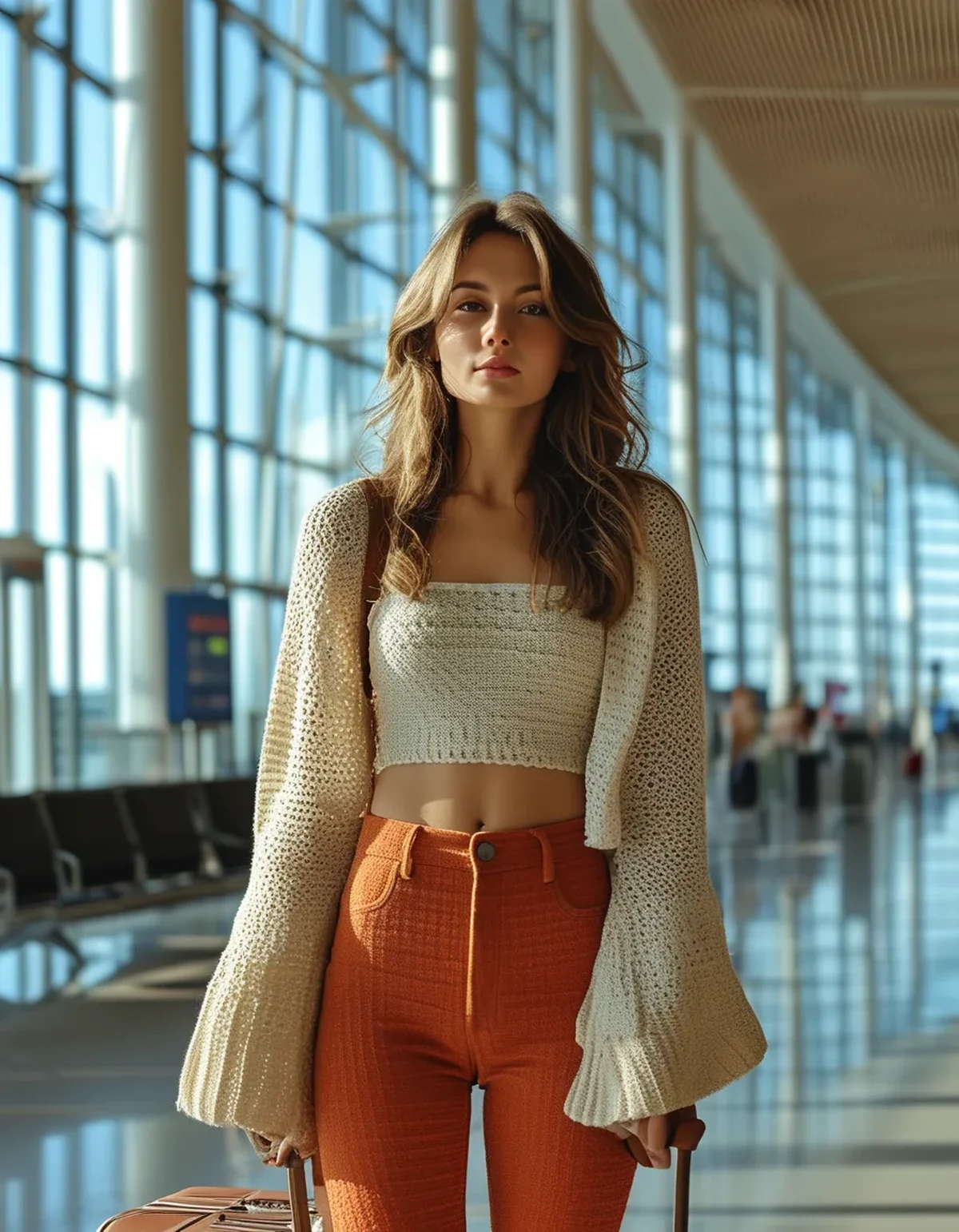
Better than almost anything else, and this is why the security friction is worth accepting.
They do not crease. This is the genuine advantage over trousers and the reason people arrive in flares looking like they did not just spend six hours sitting down. A knit flare comes off a plane looking essentially as it went on.
The waistband is comfortable seated. A wide flat knit band across the stomach for six hours is materially better than a rigid button and zip, particularly with the mild bloating that comes with cabin pressure.
Air circulates. A wide leg opening moves air, which matters on a long flight where circulation and swelling are real considerations. This is a genuine advantage over a skinny legging.
The one flight-specific downside: the hem again, in an aircraft toilet. It is a small space with a floor that is wet by hour two. Roll them, or hem them - the same fix, once more.
One tip that is worth the space: a pair of compression socks changes how your legs feel on landing far more than anything else you wear, and they work perfectly under a flare.
5 Mistakes on a Travel Day in Flares
1. Wearing a brand new pair. A travel day is a long, unforgiving test. Anything that rubs at hour two is intolerable by hour six. Wear a pair you have already done a full day in.
2. Choosing a pair with metal drawstring tips. Small, avoidable, and it is the single most common reason a pair of leggings gets you a pat-down.
3. Packing the layer instead of wearing it. A knit flare plus a thin top is cold on a plane. Wear the extra layer rather than putting it in the bag - it also frees carry-on space.
4. Forgetting the waistband pocket. It contains a card, a receipt, or a hair clip. It always does. Check it in the queue, not at the tray.
5. Not accounting for the shoe change. People plan the outfit and then wear the wrong shoes with it. The shoes are the part of a travel-day flare outfit that determines whether the whole thing works.
FAQ: Flares and Air Travel, Answered
Will I be asked to remove them?
No. Outerwear, shoes, and belts are the usual requests. Leggings are not something you will be asked to take off.
Do I need a belt?
No, and do not wear one - a metal buckle is an unnecessary tray item. If the waistband slides, use the drawstring or hem them properly.
Are flares warm enough for a cold flight?
A mid-weight knit flare is warmer than jeans in a cabin because there is no cold rigid fabric against your skin. If the flight is long, add thin socks and a wrap rather than a heavier legging.
What if I have a tight connection?
The hem is the only variable that costs you time. Roll it or hem it and a flare is as fast through an airport as anything else you own.
TL;DR:
- Metal is the only scanner issue - check drawstring tips, ankle zips, and logo tabs before you pack.
- The real cost is the hem on a security floor. Hem for flats, or roll the cuff once for the queue.
- Slip-on shoes with a closed back, and bring a spare pair of socks.
- Flares beat trousers on a flight because they do not crease and the waistband is comfortable seated.
- Never travel in a brand new pair - hour six is not the time to discover a seam.
Get the hem and the shoes right and the flare becomes the best travel trouser you own. Those are genuinely the only two decisions that matter.
See It in Motion
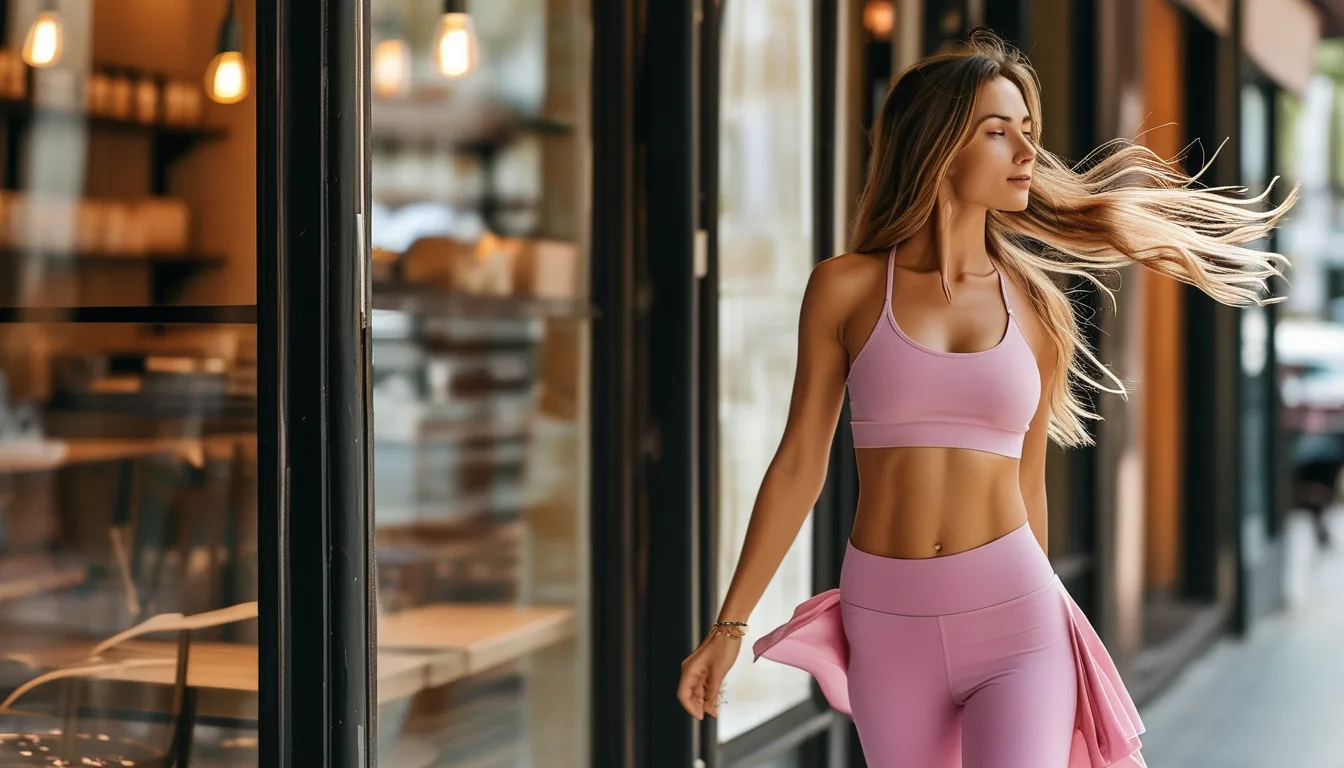
Seen here: High Waist Bootcut Yoga Pants with Hidden Pocket — shop it on bubblelime.com
Keep Reading
This article is for general informational and styling purposes only. Fit, sizing, and product availability may vary.