The Flare Leggings Work Test: When They Pass as Trousers (and When They Don't)
Quick Answer: Flares pass as trousers when five details align: a dense matte fabric with no shine or rib, a dark solid color, a clean high waistband with no visible logo, a hem that breaks over a real shoe (loafer, boot, or pointed flat - not a chunky sneaker), and a structured top half that claims the outfit. Fail any two and the pants read as leggings no matter what they cost. The test is runnable at home in ninety seconds with a mirror and honest daylight - and the top half plus shoes flip the verdict more often than the pants themselves.
The same silhouette that lounges on Sunday shows up on Monday under a blazer and nobody blinks - or someone does, and you feel it by the second coffee. The difference between those two Mondays is not luck and it is not the brand. It is a short list of visual tells, every one of them checkable before you leave the house.
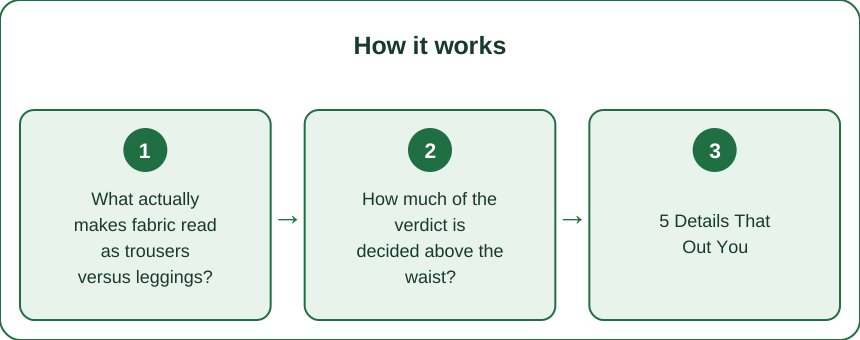
What actually makes fabric read as trousers versus leggings?
The eye runs three checks in half a second: light, thickness, and surface.
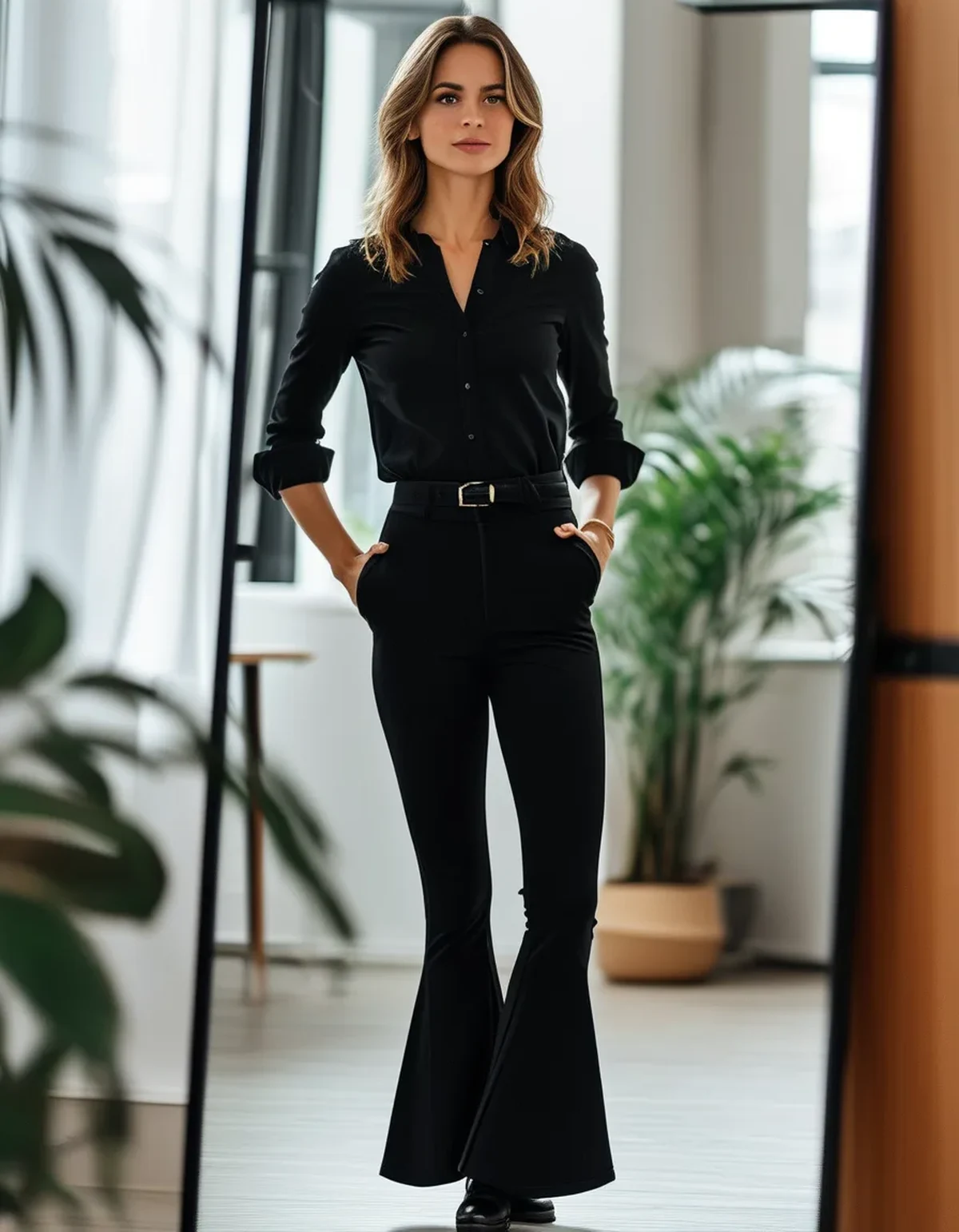
Shine is the loudest tell. Athletic fabrics with sheen - the glossy compression knits, anything with a wet-look finish - bounce light the way technical gear does, and the eye files them as gym instantly. Trouser-passing fabric is matte: ponte, thick brushed knits, dense interlock. If a window-light photo shows highlights racing down your shin, that pair is weekend-coded regardless of cut.
Thickness reads as structure. Thin fabric follows every contour of the leg, which is precisely what trousers do not do - suiting stands slightly off the body. A dense, heavier knit holds its own shape from the knee down, especially through the flare, where the bell should swing a little rather than cling. The pinch test: if you can easily feel your fingers through the fabric, it will read as leggings in person even if it photographs well.
Surface texture votes too. Ribbed knits, seamed compression panels, and contour-mapping stitch lines all say activewear; flat, smooth, uninterrupted surfaces say tailoring. The center-front seam is the interesting exception - a pressed-crease-style front seam down each leg actively reads as trousers and is the single detail that most upgrades a knit flare’s register.
Color multiplies everything. Black, deep navy, charcoal, and espresso absorb light and hide the knit’s true nature; heathered gray broadcasts it, and bright athletic colors end the conversation. A dark solid in a matte dense knit is playing the trouser game on easy mode - which is why the work-flare uniform converges there.
And drape at the hem is the final exam. A trouser hem breaks - it folds slightly where it meets the shoe. A flare with enough fabric weight does exactly this; a light flare flutters instead. Watch the hem in a mirror while walking: break passes, flutter fails.
How much of the verdict is decided above the waist?
More than half. The pants set the possibility; the top half and shoes make the ruling.
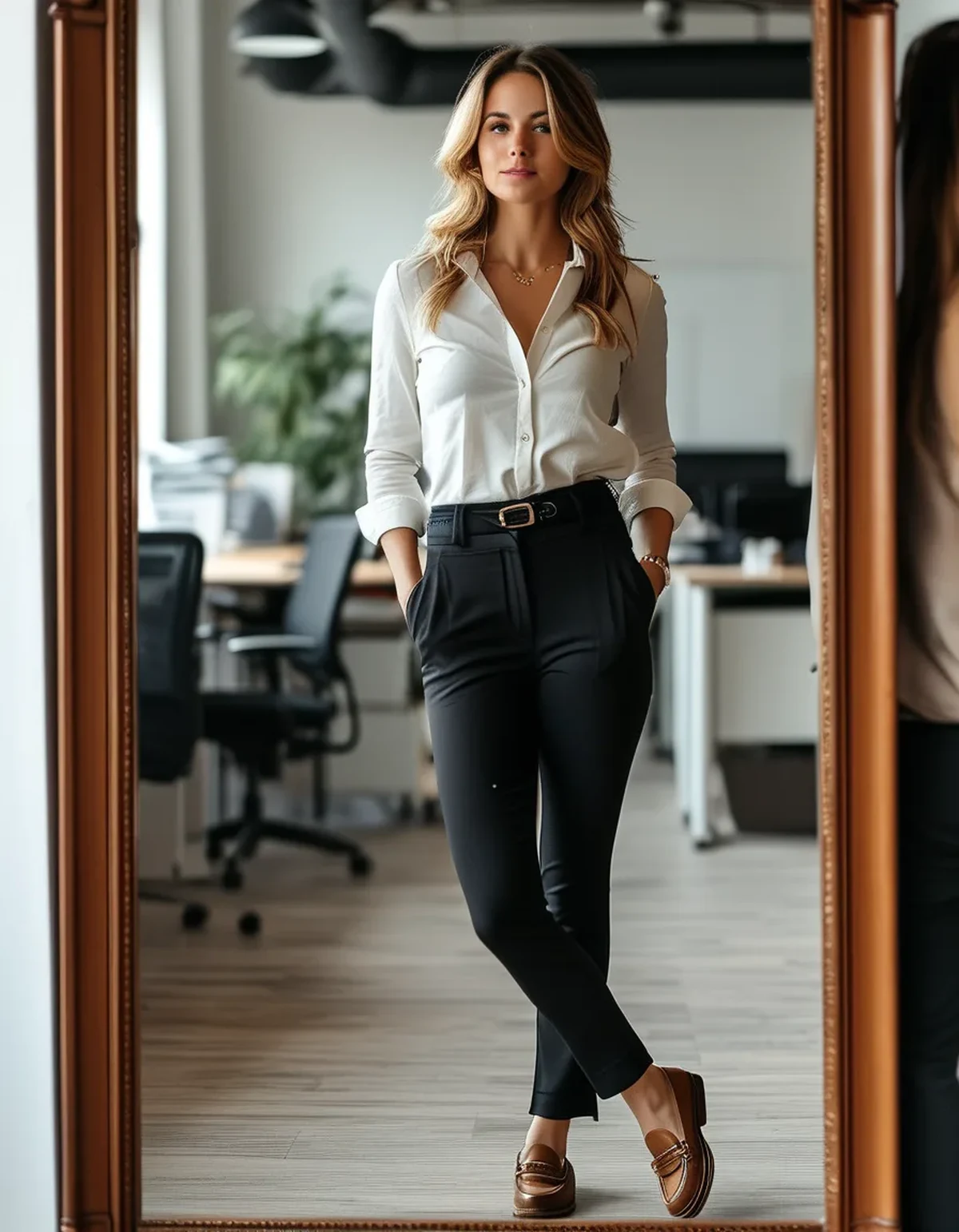
Structure on top claims the whole outfit. A blazer, a crisp button-down, a structured knit polo, or a boxy quality tee with real shoulders tells the eye this was assembled - and the eye then reads the bottom half charitably. The same flares under a slouchy hoodie are Sunday pants again. The working formula: at least one structured element between shoulders and hips, every time.
The tuck is doing quiet heavy lifting. Untucked tops over flares hide the waistband but also hide the proportion, and long-over-tight is the classic athleisure silhouette. A full tuck or front tuck shows the high waistband - which, if it is clean and logo-free, reads as high-waisted trousers - and restores the leg line that makes flares flattering in the first place. This is also where the waistband test matters: a wide smooth band passes as tailoring; an exposed brand-name elastic or a visible phone-pocket outline does not.
Shoes hold veto power. Loafers, pointed or almond flats, low ankle boots, and sleek mary janes all confirm trousers. Chunky trainers, running shoes, and anything with visible performance styling re-file the flares under athleisure instantly - the eye trusts footwear over fabric. The one sneaker exception: a genuinely minimal leather-look sneaker in white or neutral passes in casual-creative offices, though it is playing the game on hard mode.
Jewelry and bag finish the sentence. A structured bag and one or two metal details - watch, earrings - push the read further toward deliberate. None of this is about spending; it is about signals of assembly. The outfit that passes is the one where every element agrees the flares are trousers - a single dissenting item, usually the shoes, is what triggers the double take.
5 Details That Out You (and Their Fixes)
1. The logo waistband peek. You bend for a dropped pen and two inches of branded elastic announce the athletic origin over your waistband. Fix: logo-free pairs for work rotation, or tops long enough to stay tucked through a full reach - test with arms overhead at home, not at the printer.
2. The phone-pocket bulge. Side pockets are the best feature of weekend flares and the loudest tell of work ones - a phone-shaped rectangle on your thigh is pure activewear. Fix: keep the phone in your bag on office days, or choose work pairs with back pockets or none. Empty side pockets in thick fabric pass fine; it is the cargo that convicts.
3. The static cling afternoon. Dry office air plus knit fabric plus a nylon chair equals flares plastered to your calves by 2pm, and clinging fabric reads as leggings from across any room. Fix: a swipe of dryer sheet or anti-static spray inside the hem in the morning, and heavier fabric weight next purchase - dense knits barely cling.
4. The hem-wave after washing. Some flares develop a rippled, lettuce-edge hem after machine drying - elastane in the hem shrinks unevenly - and a wavy hem reads unmistakably as worn-out legging. Fix going forward: hang dry always. Fix for an already-wavy pair: a cool iron over a pressing cloth flattens it substantially, and that pair rotates to weekend duty.
5. The athletic top half by default. The flares were fine; the sports bra visible through a thin white tee, the quarter-zip, or the running jacket grabbed at the door were not. The outfit is graded as a whole, and one performance piece re-codes everything. Fix: stage the work uniform the night before as a complete unit - flares, structured top, real shoes - exactly the way gym clothes get staged, because both uniforms fail at 7am when assembled from parts.
Where do they pass - and how do you calibrate to your office?
The honest venue-by-venue map, because pass is contextual.
Casual and creative offices: full pass. Tech, studios, agencies, schools with relaxed codes - a dark matte flare with a decent top half is entirely unremarkable here, and frequently among the more pulled-together outfits in the room. This is the flare’s home territory and no special effort is required beyond the five details.
Business casual: pass with the full toolkit. This is the setting the whole test exists for. Dense matte black pair, front-seam style if you have one, full tuck, blazer or structured knit, loafers or boots, structured bag. Executed completely, the outfit reads as knit trousers - a category business casual explicitly includes - and coexists peacefully with everyone’s chinos. Executed at 80 percent, it reads as trying to sneak leggings in, which lands worse than either committing or not.
Formal and client-facing: do not run the test. Suiting environments, courtrooms, conservative finance, big-meeting days - the downside of a miss outweighs the comfort win. This is what actual trousers are for; save the flares for the commute and the desk days.
The calibration method for any workplace: read the room’s feet. If sneakers are common at your office, minimal-sneaker flares pass. If everyone is in loafers, yours plus flares pass. If the room is in heels and suiting, the flares stay home. Footwear is the fastest proxy for a dress code nobody wrote down.
And run the ninety-second home test before the debut: daylight by a window, phone camera at waist height (mirrors flatter; cameras testify) - stand, sit in a chair for thirty seconds, stand again. Check: shine down the shin, contour cling behind the knee, waistband print-through, hem behavior over the shoes you will actually wear. Pass all four on camera and the pair is office-cleared; the double take never happens because there is nothing to take twice.
The quiet payoff of getting this right: an all-day work outfit with yoga-pants comfort that survives the commute, the desk crouch, the 6pm errand - the entire reason the knit-trouser category exists. Done properly, nobody at work thinks about your pants at all, which was always the definition of passing.
FAQ: Flare Leggings at Work, Answered
Can you wear flare leggings to the office?
In casual and business-casual settings, yes - executed as knit trousers: dense matte fabric, dark solid color, clean logo-free waistband, structured top half, and real shoes (loafers, flats, ankle boots). Formal and conservative client-facing environments are the exception; there, actual trousers remain the tool for the job.
How do I make flare leggings look like dress pants?
Five levers: choose thick matte fabric with no shine or rib (a front seam down each leg helps most), stick to black or navy, tuck the top to show a clean high waistband, pair with polished flat shoes, and add one structured piece - blazer, crisp shirt, or structured knit - up top. The eye grades the whole outfit; shoes and top half flip the verdict more than the pants.
What shoes should I wear with flare leggings for work?
Loafers, pointed or almond-toe flats, low ankle boots, and sleek mary janes all confirm the trouser read. Chunky athletic sneakers un-pass the outfit instantly. The borderline case is a minimal leather-look sneaker, workable in casual-creative offices - calibrate by what shoes your workplace already wears.
Why do my flare leggings still read as leggings?
Usually one of five tells: shine or ribbed texture in the fabric, a visible logo waistband, a phone bulging in a side pocket, static cling to the calves, or an athletic piece up top re-coding the outfit. Run the daylight phone-camera test - stand, sit thirty seconds, stand - and the specific tell shows itself, along with which fix (fabric weight, tuck, anti-static, staging) it needs.
TL;DR:
- The pass is five details: matte dense fabric, dark solid color, clean waistband, trouser-confirming shoes, structured top.
- More than half the verdict is decided above the waist - the tuck and the shoes outrank the pants.
- The tells that convict: shine, logo peek, phone-pocket bulge, static cling, wavy hem. Each has a cheap fix.
- Calibrate by your office’s feet: the room’s shoes are the dress code nobody wrote down.
- Test at home with a phone camera in daylight - stand, sit, stand - and debut only what passes on camera.
Passing was never about fooling anyone. It is about an outfit so coherent that nobody thinks about your pants at all - which, on a nine-hour day, is the entire luxury.
See It in Motion
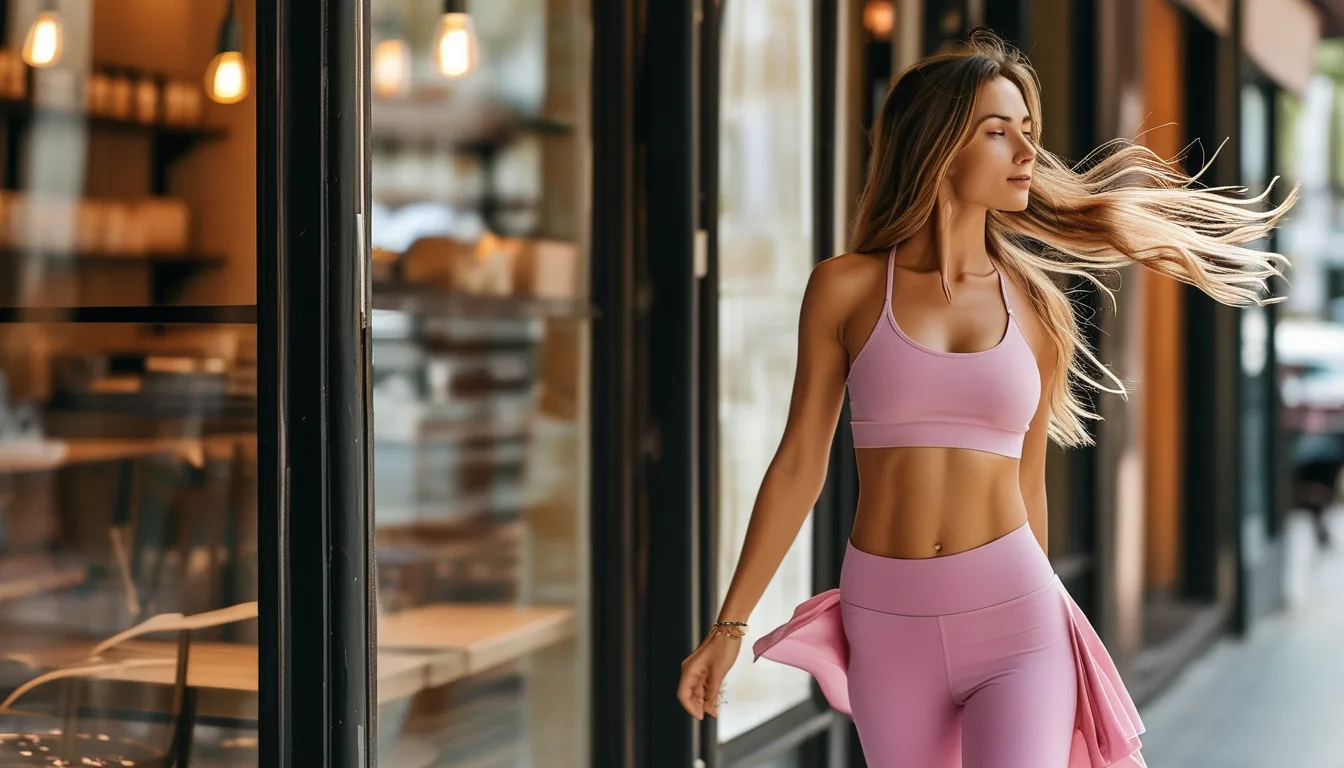
Seen here: Bootcut Capri Yoga Pants with Pockets — shop similar styles on bubblelime.com
Keep Reading
This article is for general informational and styling purposes only. Fit, sizing, and product availability may vary.