Why Flare Leggings Feel Different to Move In (And When That's a Problem)
Quick Answer: Flare and wide-leg leggings feel different because the extra fabric below the knee is unattached and moves independently of your leg, unlike compression-fit leggings where fabric moves with your muscle. This works fine — even beautifully — for slower, controlled movements like yoga, pilates, and walking, but becomes a real hazard in high-impact activities like running, HIIT, or jump rope, where the loose fabric can catch on your other ankle, a shoe, or equipment mid-motion.
You pull on a pair of flare leggings for your usual pilates class and love how they move — swishy, elegant, nothing clinging to your calf. Then you wear the same pair to a HIIT class three days later and nearly trip over your own pant leg during burpees. Same leggings, wildly different experience. Here’s why.
What’s Mechanically Different About Flared Fabric?
Standard compression-fit leggings are cut to hug your leg’s actual shape, which means the fabric moves in sync with your muscle — when your calf flexes, the fabric flexes with it, staying close to your skin at every point in the movement.
Flared and wide-leg leggings are cut with extra fabric added below the knee — sometimes 4-8 inches of additional circumference compared to your actual leg width. That extra fabric isn’t attached to anything; it just hangs, following gravity and momentum rather than your muscle. When you move slowly, that fabric has time to settle and swing predictably. When you move fast, it has momentum of its own — it swings wider than your leg does, lags behind your leg’s actual position, and can end up somewhere your leg isn’t a split second later.
This is the same physics that makes bell-bottom pants a liability on a bicycle (hence the classic pant-leg-in-the-chain problem) — unattached fabric doesn’t track a fast-moving joint the way fitted fabric does.
For slow, floor-based, or standing-in-place movement, this lag is invisible or even flattering (it creates a graceful drape). For fast, multidirectional, or airborne movement, that same lag becomes a tripping and snagging risk, because the fabric is a half-step behind where your legs actually are.
Which Workouts Actually Work Well With Flare?
Yoga and pilates are close to ideal for flare fabric. Movements are controlled, floor contact is frequent, and there’s rarely a moment where your ankle is moving faster than your fabric can follow. The drape of a flare leg even enhances certain poses visually, adding movement to transitions like warrior flows.
Walking and low-intensity cardio also work well — a walking stride doesn’t generate the ankle speed or crossover leg patterns that cause fabric-catching, and the swing of a wide leg can feel pleasant rather than restrictive.
Barre and dance-based fitness sit in a gray zone. Slower barre work is fine; anything involving quick footwork, kicks, or turns (as in dance cardio) starts to introduce the same catching risk as HIIT, just at a lower intensity.
Strength training with a stable stance (squats, deadlifts, most machine work) is generally safe because your feet aren’t crossing paths or moving rapidly relative to each other — the main risk there is fabric catching on equipment rather than your own legs.
The common thread: flare works when your feet stay a predictable, wide distance apart and your ankles aren’t crossing near each other at speed. It becomes risky the moment those two conditions break.

What Nobody Tells You About Flare and High-Impact Movement
Brands rarely advertise this, but flare-leg activewear is genuinely unsuited to a specific category of movement: anything where your feet cross close to the midline at speed.
Running has a natural gait where each foot swings past the opposite ankle on every stride — that’s exactly the crossing-near-the-midline pattern where a wide pant leg can catch on your other ankle or shoe, especially at faster paces where the swing has more force behind it. This is why you rarely see flare-leg leggings marketed specifically for running, even though they’re marketed for nearly everything else.
Jump rope multiplies the risk because your feet are leaving the ground repeatedly and the fabric has a full airborne moment to swing unpredictably before your foot lands again — a single catch on the rope or your own ankle at the wrong moment causes a fall, not just a stumble.
Box jumps, burpees, and mountain climbers in HIIT circuits combine speed with proximity to equipment (the box edge, the floor), so a flared pant leg catching on a box corner or your own trailing foot is a common and underreported injury cause in group fitness classes.
The industry workaround for people who love the flare silhouette but do mixed workouts is a flare with a fitted knee panel — compression-fit from waist to knee, then flare below. This gives you the aesthetic with less unattached fabric length, reducing (though not eliminating) the catch risk during faster movement.
How Wide Is Too Wide? A Practical Way to Judge Flare
Not all flare is equal, and width matters more than the “flare” label itself.
Subtle flare (2-3” wider than your ankle at the hem) behaves closest to a straight-leg fit. This width still swings a little but rarely has enough excess fabric to catch on anything — it’s the safest flare option if you want the silhouette without the risk in mixed-activity settings.
Moderate flare (4-6” wider at the hem) is where yoga and pilates brands typically land. Fine for controlled movement, starting to be noticeable if you try anything faster.
Dramatic wide-leg (7”+ wider at the hem, sometimes called “palazzo” style in activewear) should be treated as a studio-only or lounging silhouette. This width has enough loose fabric that even a brisk walk can produce visible swing, and it should not be worn for anything involving running, jumping, or fast footwork.
A simple test before a new workout: stand with feet together and swing one leg forward and back like a stride. If the fabric visibly lags behind or swings past your actual ankle position, that’s your fabric telling you it’s not built for fast, repetitive motion.
FAQ: Flare Leggings Questions, Answered
Are flare leggings bad for all workouts?
No — they’re specifically mismatched to fast, crossing-foot movements like running or jump rope. For yoga, pilates, walking, and most strength training, they perform fine.
Why do flare leggings look so popular in gym content if they’re risky for some workouts?
Most flare-leg activewear content shows yoga, stretching, or styling — activities where the silhouette genuinely works. The mismatch only shows up in high-impact use, which is less commonly featured in marketing photos and video.
Is a bootcut different from a flare?
Yes — bootcut has a much subtler widening (often under 2 inches), closer to a straight leg with a slight kick at the hem, and generally carries less of the catching risk than a true flare or wide-leg cut.
Can I make flare leggings safer for mixed workouts?
Look for styles with a fitted knee panel that only flares below the knee, which reduces the length of unattached, swinging fabric compared to a flare starting at the thigh.
TL;DR:
- Flare fabric below the knee is unattached and moves independently of your leg, unlike compression-fit fabric that tracks your muscle
- This works well for yoga, pilates, walking, and stable-stance strength training
- It becomes a real snag and tripping risk in running, jump rope, HIIT, and any movement where your feet cross near the midline at speed
- Judge flare width by testing a forward-back leg swing — visible fabric lag means it’s not built for fast, repetitive motion
Pick your flare width by your workout’s footwork, not just how it looks in the mirror standing still.
See It in Motion
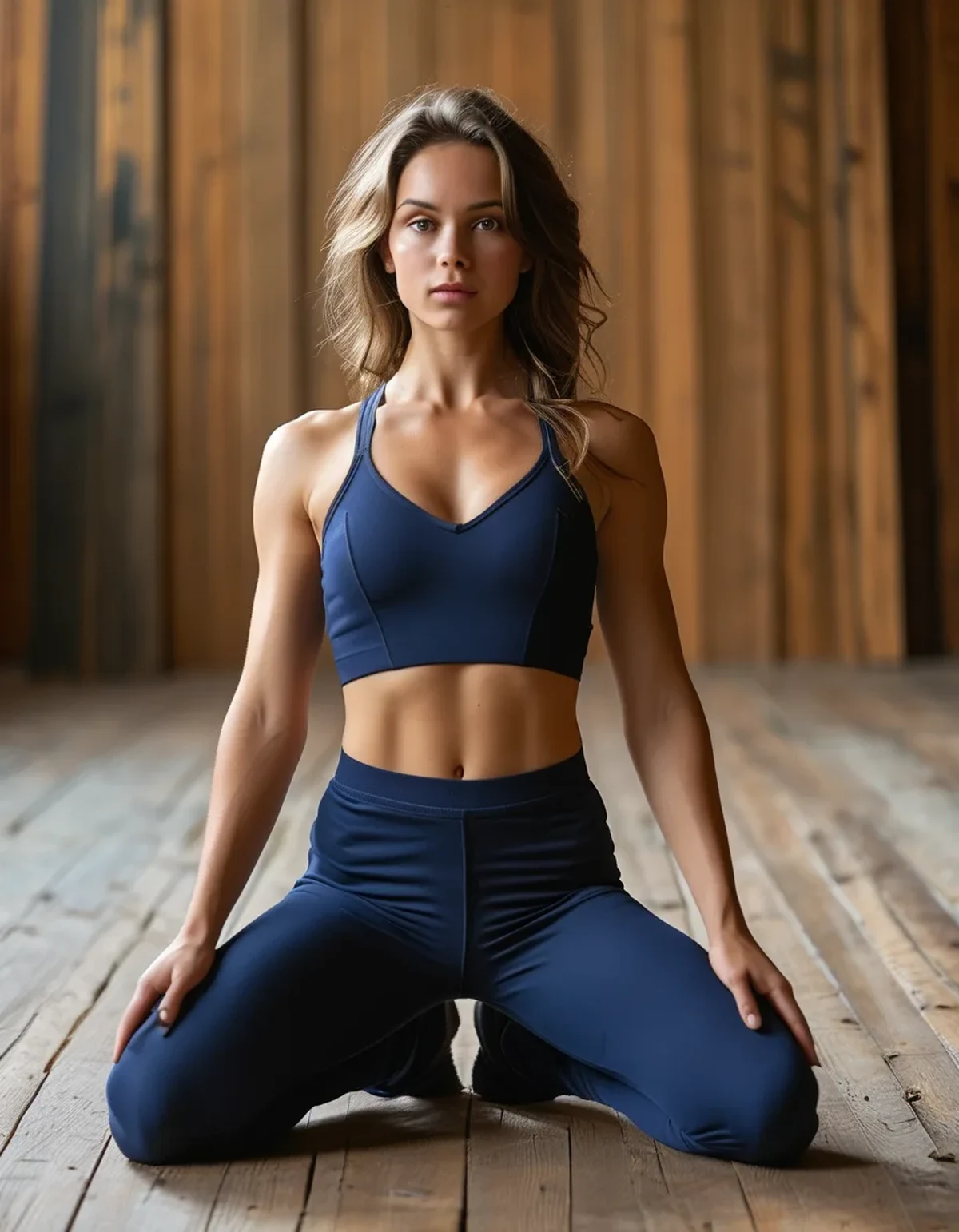
Seen here: High Waist Yoga Leggings with Side Pockets — shop it on bubblelime.com
Keep Reading
This article is for general informational and styling purposes only. Fit, sizing, and product availability may vary.