Why Your Flare Hem Wears Out at the Back First
Quick Answer: The back of a flare hem wears first because your heel strikes the ground behind your center of mass, which drops the back of the hem lower than the front on every step. Add the fact that the hem swings backward at the end of each stride and you get a surface that contacts the ground hundreds of times per walk. Hem tape, a half-inch shorter cut, and rotating between two pairs are the three fixes that actually work.
You look at a pair you have worn for six months and the front hem is pristine. The back is fuzzy, gray, and starting to unravel. Every pair does this, and every pair does it in the same place.

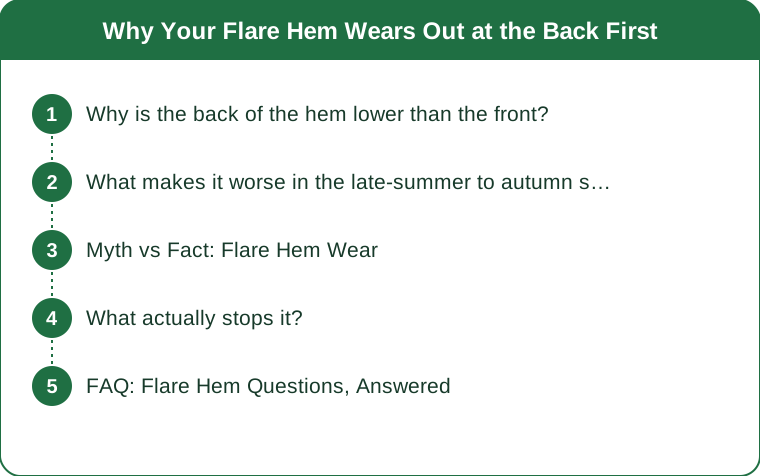
Why is the back of the hem lower than the front?
Because walking is not a symmetrical motion, and the hem hangs from a leg that is constantly changing angle.
Your heel lands ahead of you, and your leg is angled backward at push-off. At the moment your back foot leaves the ground, the lower leg is tilted, which swings the back of the hem toward the pavement while the front lifts away.
The hem is a hanging circle, not a fixed one. Unlike a jeans hem sitting on a stiff denim leg, a flare hem in soft performance fabric moves independently. It arrives at the ground slightly after your foot does, at the exact moment your leg is most tilted.
Every step is one contact. At 6,000 to 10,000 steps a day, even light contact accumulates. This is abrasion by repetition, not by force.
Which is why the wear pattern is so consistent. Look at any well-worn pair of flares or bootcuts and the fuzzing sits in the same arc across the back third of the hem - the fabric is telling you exactly where it touched down.
What makes it worse in the late-summer to autumn stretch?
Wet ground and grittier sidewalks, mostly.
Damp pavement holds abrasive material. Dry dust brushes off; wet grit sticks to the hem and then acts like sandpaper for the rest of the walk. A single rainy commute does more hem damage than a week of dry ones.
A wet hem is a heavier hem. Water adds weight to exactly the part that swings, which increases contact force and keeps the hem hanging lower for hours.
Shoe changes shift the length. Going from a summer sandal to a cushioned autumn sneaker changes hem clearance by up to an inch - in the good direction if you are lucky, and in the bad direction if the sandal had a platform.
Leaves and street salt are the seasonal accelerators. Wet leaves are surprisingly abrasive, and once salting season starts, the residue that wicks up the hem will stiffen the fibers and make them break rather than bend.
Practical response: keep one pair as your outdoor pair and one as your indoor pair once the weather turns. Rotation is the cheapest possible intervention.

Myth vs Fact: Flare Hem Wear
Myth: It means the leggings are cheap. Fact: Expensive flares wear at the back too - the geometry does not check the price tag. What price often buys is a heavier hem finish and a denser knit that resists abrasion longer, but the wear location is identical.
Myth: You must be dragging your feet. Fact: Foot strike style makes a modest difference, but the back hem contacts the ground even in a clean, high-clearance gait. This is not a walking flaw.
Myth: A raw-cut hem wears faster than a stitched one. Fact: Often the opposite. A stitched, turned hem is a thicker edge that catches the ground more; a clean raw edge in a bonded knit can sit closer to the leg and take less contact. The stitched hem does look neater for longer once wear starts, though.
Myth: Hemming half an inch shorter ruins the look. Fact: Half an inch is inside the tolerance where the flare shape is unaffected, and it is enough to move most of the contact off the fabric.
Myth: Once it starts fraying, the pair is finished. Fact: Hem tape or a professional re-hem will get you another season out of them, and both cost a fraction of a replacement pair.
What actually stops it?
Three things, in order of how much they help per unit of effort.
1. Hem tape on the inside back edge. Iron-on or sew-in hem tape, applied to the inside of the back third of the hem, gives the ground something to abrade that is not your leggings. It costs almost nothing and it is invisible from outside. Replace it once a season rather than replacing the pair.
2. Take half an inch off. Most people wear flares a touch too long because the drape looks better standing still. Half an inch shorter changes very little visually and removes a large share of ground contact, because contact is a threshold effect - either the hem touches or it does not.
3. Rotate two pairs. Fibers recover elasticity between wears, and a hem that gets 48 hours to relax abrades more slowly than one worn daily. Rotation also halves the exposure per pair, which is the obvious part.
Optional fourth: mind your shoe stack. A sneaker with a 1-inch midsole lifts the whole hem. If you have one pair you love and refuse to shorten, wear them with height.
What does not work: fabric protector sprays. They repel liquid, which helps a little with wet grit, but they do nothing about abrasion, which is the actual mechanism.
FAQ: Flare Hem Questions, Answered
Can a frayed hem be repaired?
Yes, if the damage is confined to the last half inch. A tailor can trim the damaged edge and re-hem, though on a flare this means losing a small amount of hem circumference. Catch it early and the loss is invisible.
Does washing make fraying worse?
Machine washing agitates already-loose fibers and accelerates unraveling once it has started. Turn the pair inside out, use a mesh bag, and skip the dryer - heat is what makes broken fibers curl and fuzz.
Should I buy flares in a shorter inseam on purpose?
If your brand offers a shorter option that still has a proper flare angle, it is the cleanest solution. Just check that they redrafted the panel rather than simply cutting the leg shorter, which produces a narrower opening.
Is this different from bootcut?
Same mechanism, slightly less severe. A bootcut has a smaller opening and a hem that stays closer to the ankle, so it swings less and contacts less. Full flares get the worst of it.
TL;DR:
- The back hem wears first because your leg is tilted backward at push-off, dropping the rear hem to the ground.
- Wet autumn pavement is the accelerator - damp grit abrades far faster than dry dust.
- Hem tape on the inside back edge is the highest-value fix, followed by taking half an inch off.
- Rotate two pairs, skip the dryer, and remember shoe stack height changes clearance by up to an inch.
What makes this worth a few minutes of attention is that hem wear is the thing that retires most flare leggings - not the knees, not the waistband, not the color. The fabric is usually fine everywhere else. A strip of hem tape and half an inch of length is the difference between two seasons and four.
See It in Motion
Seen here: High Waist Yoga Leggings with Inner Pocket — shop it on bubblelime.com
Keep Reading
This article is for general informational and styling purposes only. Fit, sizing, and product availability may vary.